QR delivered by email in under 3 minutes. Install before you travel, activate when you land.
Destination guide
Last updated: June 15, 2026Serengeti, the Ngorongoro crater, Kilimanjaro and Zanzibar’s spice-scented beaches — Tanzania is the Africa of safari dreams and turquoise Indian Ocean. Here is the essential, verified, including what has changed on safety.
Travel essentials
Unlike neighbouring Kenya, Tanzania requires a visa for the vast majority of travellers. The simplest is to apply for the tourist eVisa (up to 90 days, single entry) at least 2 weeks ahead on the official immigration portal; a visa on arrival (VOA) is also available at major airports and borders, paid in US dollars. Important: Zanzibar now requires mandatory travel insurance on entry — confirm the requirement and the current fee before you leave. Always confirm at the official source.
| Passport | Entry rule | Max stay |
|---|
| Portugal · Spain · France · United Kingdom | Visa required — eVisa (recommended) or visa on arrival | up to 90 days |
| Cabo Verde · Guinea-Bissau · Angola · Nigeria · Ghana · Senegal | Visa required — eVisa or VOA (eligibility varies by country; check with the embassy) | up to 90 days |
⚠️ Border rules change without notice. Always confirm with the official source (consulate, immigration, travel.state.gov, gov.uk, Portal das Comunidades) before travelling.
Health
Yellow fever: not required if you arrive directly from Europe; it becomes mandatory if you come from a country with transmission risk or transit more than 12 hours through an airport in an endemic zone — the typical case of a Kenya safari leg before crossing into Serengeti or Zanzibar. Malaria prophylaxis is recommended for the mainland; Zanzibar is lower-risk but not zero.
Passport
Passport valid for at least 6 months beyond your stay, with blank pages; the eVisa requires proof of accommodation and onward flights.
To confirm (not published as fact):
- Zanzibar mandatory travel insurance: confirm it is still in force and the current fee (a few tens of USD per person) before stating it as fact.
- eVisa vs visa-on-arrival eligibility for each African passport in the corridor (varies by country) — validate with the relevant embassy.
Arrival & Safety
Airport
Three gateways: Julius Nyerere International (DAR), in Dar es Salaam; Kilimanjaro International (JRO), the most practical for the northern safaris (Serengeti, Ngorongoro) and Kilimanjaro; and Abeid Amani Karume International (ZNZ), in Zanzibar, for the beach and Stone Town.
Getting in
In Dar es Salaam, Uber and Bolt operate, with transparent fares. Note: in Zanzibar ride-hailing apps don’t work — use private transfers arranged by your accommodation or taxis with a price agreed up front. For safaris, always go with a reputable operator and a 4x4 with a guide.
Safety
Level 3 — Reconsider travel (US); Zanzibar more stableNote: the US raised Tanzania to Level 3 (reconsider travel) in late 2025, citing unrest, crime and terrorism risk. In practice, the incidents most reported by tourists are muggings and bag/wallet theft in poorly lit city areas. The Zanzibar archipelago remains more stable and its tourist areas (Stone Town, Nungwi, Kendwa, Paje) are considered safe, with petty theft the main concern. Avoid walking at night, don’t flash valuables and use trusted taxis/transfers. Confirm the current advisory before travelling.
⚠️ Border rules change without notice. Always confirm with the official source (consulate, immigration, travel.state.gov, gov.uk, Portal das Comunidades) before travelling.
Money
Currency: Tanzanian shilling (TZS). For tourism (lodges, safaris, tips), the US dollar is widely accepted and often preferred — but only crisp bills printed after 2009. Carry TZS for markets, transport and rural areas. ATMs in cities and tourist hubs; cards at mid/upper-range venues.
Connectivity
Vodacom leads nationwide coverage and 5G (Dar es Salaam, Zanzibar), with Yas (formerly Tigo) and Airtel close behind; Halotel covers rural areas and Zantel is strong in Zanzibar. As in Kenya, mobile money (M-Pesa, Mixx, Airtel Money) is everywhere. For the Serengeti + Ngorongoro + Zanzibar circuit, an eSIM roaming on Vodacom/Yas keeps you connected without swapping SIMs.
Arriving with data on avoids queues and SIM registration at the airport and lets you confirm your safari transfer or Zanzibar taxi right away. An eSIM activated before departure is the simplest way — especially if you land at night in Kilimanjaro or Zanzibar.
Coverage is excellent in Dar es Salaam, Arusha and Zanzibar’s resort areas, and becomes sparse or non-existent deep inside the national parks — something to plan for in the Serengeti. WhatsApp is the standard channel to reach guides, lodges and drivers.
See eSIM plans →Sending money Tanzania
Sending money to Tanzania is part of diaspora life. The usual options: bank transfer (slower and sometimes with hidden FX margins), specialist apps like Wise, Remitly and WorldRemit (fast and transparent on fees), and cash pickup via Western Union or MoneyGram. In Tanzania, mobile wallets (M-Pesa, Mixx by Yas, Airtel Money) receive directly; there’s also cash pickup, in shillings (TZS). Always compare the total cost — fee plus exchange-rate margin — and the speed before sending. Verde Wave never handles money; we just point you to the tools.
Practical tips
Best time
The dry season (June to October) is best for safari and beach. For the Great Migration in the Serengeti there are two strong windows: January–March (calving season in Ndutu) and July–October (river crossings in the north). Zanzibar is pleasant almost year-round, avoiding the long rains of April–May.
Languages
Swahili (Kiswahili) is the national language and a strong unifying force; English is widely used in tourism and business. A few phrases earn smiles: “Jambo” (hello), “Asante” (thank you), “Karibu” (welcome) and “Pole pole” (slowly, slowly — the rhythm of safari and of the Kilimanjaro climb).
Etiquette
Tanzania is culturally conservative, even more so in the Muslim archipelago of Zanzibar: away from resorts and beaches, cover shoulders and knees (men and women), especially in Stone Town. Ask permission before photographing people, especially Maasai communities. Respect rangers’ rules in the parks and use only reputable operators.
What to see & culture
Places
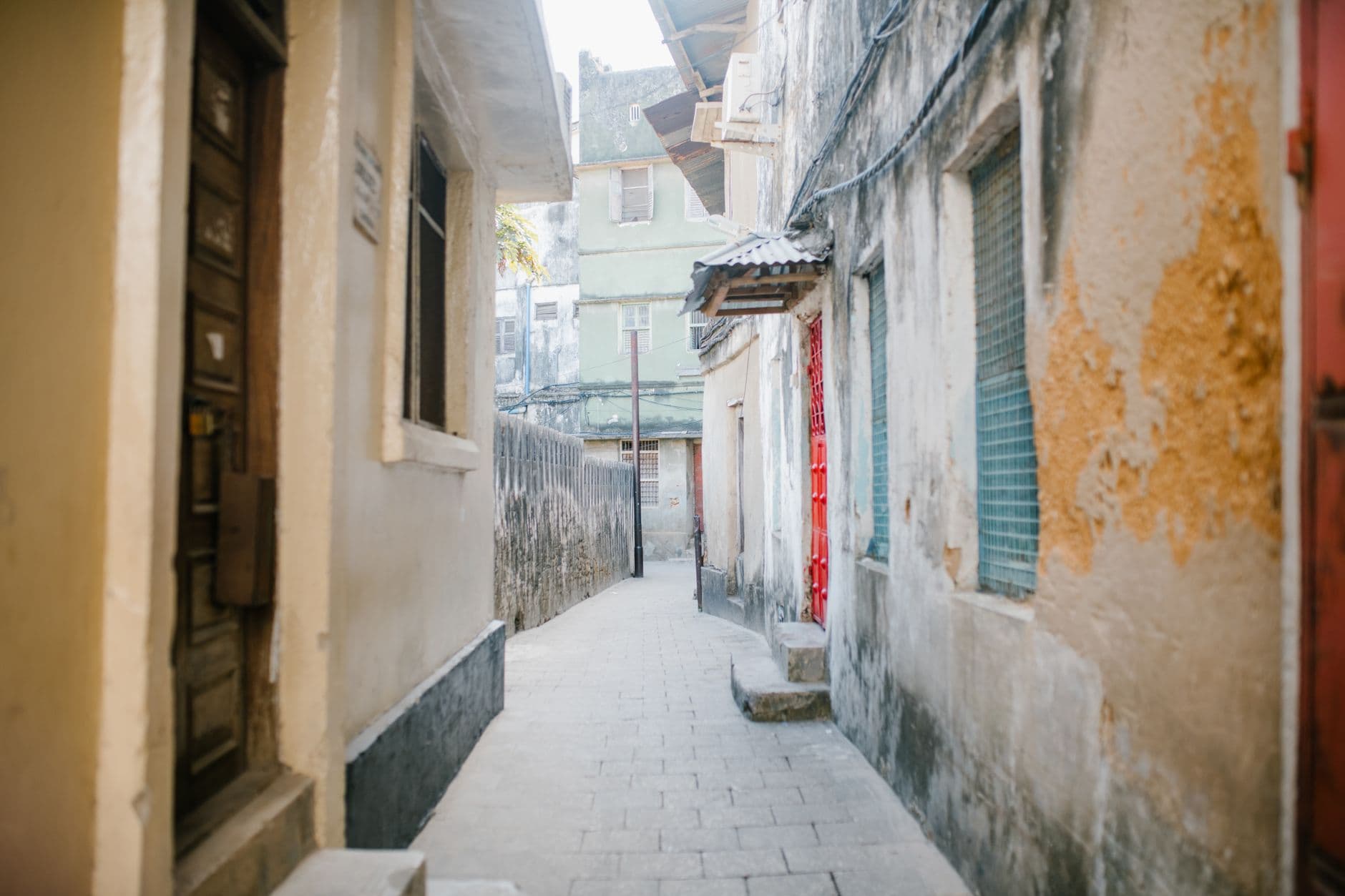
Africa’s natural marvels: the Serengeti and the Ngorongoro crater, Tarangire and Lake Manyara, the snow-capped peak of Kilimanjaro (Africa’s roof) and, on the coast, Zanzibar — Stone Town (a World Heritage Site), the beaches of Nungwi and Paje and the spice islands.
Culture
Huge ethnic diversity (Maasai, Chagga, Sukuma and many others) and a coastal Swahili heritage blending African, Arab and Indian influences in Zanzibar. In music, bongo flava dominates East Africa; tingatinga painting, with its vivid colours, is a visual signature of the country.
Food
Nyama choma (grilled meat) and ugali are the mainland staples; chipsi mayai (a chip omelette) is the street snack par excellence. On the coast and in Zanzibar, Swahili cuisine shines with spice-scented seafood curries, pilau and the famous “Zanzibar pizza”. Chai and coffee from the Kilimanjaro region.
Sources
- US State Department — Tanzania Travel Advisory (Nível 3, fim de 2025)
- UK FCDO — Tanzania foreign travel advice (segurança, saúde, vistos)
- Tanzania Immigration Services — eVisa oficial
- NaTHNaC / TravelHealthPro — Tanzania (febre-amarela e malária)